Y’all–I had a lightbulb moment! I was watching Dr. Bill Vicars’ Linguistics #1 Class when I learned something new that immediately improved my sign language production.
Now that I’ve learned it, I can’t believe I didn’t notice these handshapes before because they’re so frequently used: the BASOC15 handshapes.

My notes from Dr. Vicars’ class state that, “Your non-dominant hand is generally limited to these primary [seven] hand shapes if it’s not fulfilling the symmetry condition.”
What does this mean? Here is my interpretation!
Disclaimer: I am an American Sign Language student and not an expert. This tip from Dr. Bill Vicars simply helped me get better at sign language, faster, so I wanted to share in case it helped other students.
What are the BASOC15 handshapes in ASL?
The BASOC15 handshapes are seven common handshapes in ASL that are most often used in two-handed signs under certain conditions. Specifically, the BASOC15 handshapes are used by your non-dominant hand during signs where your hands take two different shapes.
When to Use the BASOC15 Handshapes
In other words, if your non-dominant hand…
- is included in a sign and
- takes a different shape than your dominant hand,
then your left hand will almost always take the general shape of the signs that make up these ASL letters: B/A/S/O/C/1/5, pictured below:
The BASOC15 Handshapes:





A note about the “O” handshape in the BASOC15
One example that seems like it breaks this rule is the word “About” — take a look: About
While sometimes, the “O” sign from the BASOC15 is the general round “O” shape, sometimes it’s a flattened “O”, like in the sign for “About” or the general shape for the sign for “Give“. Keep this in the back of your mind — it might not be round, but it’s still an “O” from the BASOC15–sort of!
How the BASOC15 handshapes improved my signing:
Specifically, keeping the BASOC15 handshapes in mind as I sign helped me to…
- Use my non-dominant hand more mindfully
- Zero in on the nuances of the shapes my hands make
- Memorize new, two-handed signs with different hand shapes much faster
- (New!) Tuck my thumbs in when using the “A” handshape rather than let them stick out, which is apparently something many hearing signers do!
Now, any time I have a sign that uses my non-dominant hand with a different shape than my dominant hand, I ask myself:
Which of the BASOC15 does this sign use?
Handshapes Beyond the BASOC15 with your non-dominant hand
You might notice that, with some two-handed signs, other handshapes not included in the BASOC15 are used:

When a sign utilizes what’s known as “symmetry condition”, your non-dominant hand often will take on hand shapes beyond the BASOC15.
- Video Sign Examples: Keep, Sister/Brother, Awkward, Meet
Symmetry Condition in ASL: This is where a signer makes the same, symmetrical hand shape with both hands (the movement can be the same or alternating)
Symmetry Condition Examples
Notice that both hands use the same handshape, moving into letters beyond BASOC15–X, 25, F, etc.
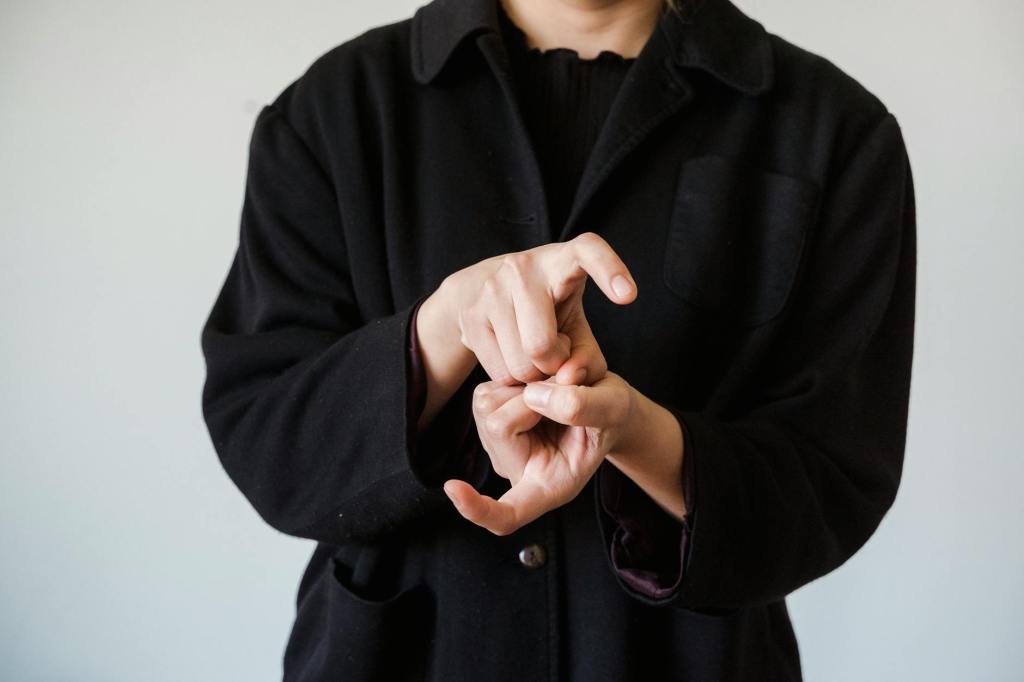
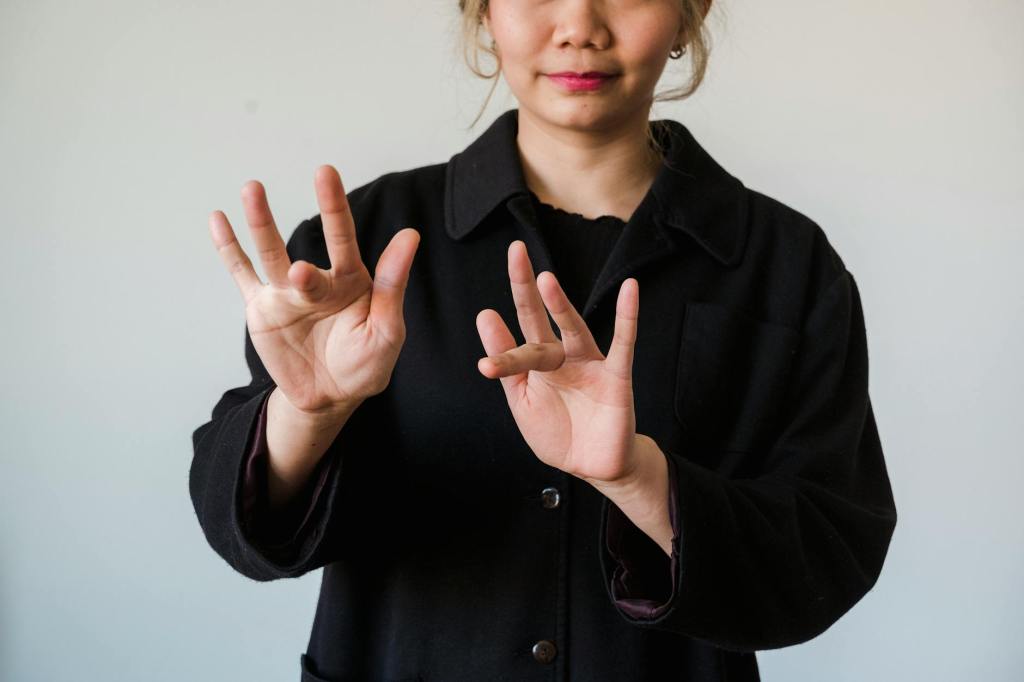

– Photos by Kevin Malik on Pexels.com
In short, expect to use more handshapes with your non-dominant hand than the BASOC15 when your signs reflect the “symmetry condition.”
Why this tip improved my signing
This idea has fixed a huge problem of mine as an American Sign Language student. I stopped forgetting what to do with my non-dominant hand!
Remembering the seven “BASOC15” signs allows me to be more mindful of my left hand. It helps me pay closer attention to the nuance of it to get the shape just right.
Using the BASOC15 will not be an exact copy of the BASOC15 alphabet, and some shapes may be more relaxed or “Open” (such as the “B” handshape). The BASOC15 shape itself may not be a STRICT representation of the ASL alphabet, but it should resemble those letters!
However, remembering that big idea as I sign allows me to pay more careful attention to the specifics of the individual sign’s individual shape–instead of forgetting the whole shape of it entirely!
Where can you learn more about ASL Linguistics from Deaf experts?
This tip comes from Dr. Bill Vicars’ Linguistics Course, Lesson 1: ASL Linguistics. There is a whole series there you can follow along with!
Did this help your signing? If so, I also recommend you DONATE to LifePrint.com’s ASL University if you can! Every little bit helps keep this resource free for everyone. It shows your appreciate to the wonderful educators who have created this resource.
Leave a comment!
What’s one BASOC15 sign you use a lot? Drop it in the comments below!
 Sarah Snow
Leave a comment